Science glossary
Science glossary
This blog will be related to my program : Science. This Science glossary will focus on the three main branches: chemistry, biology, and physics. Its purpose is to help students like me or people interested in this field of study to remind them of some of the words presented in the first year of the program and to teach them the meaning of these words often used.
- acceleration
- noun
- The rate of change of velocity per unit of time.
- Example: This is the centripetal ACCELERATION, component for point C with respect to A in the open configuration.
- en: accéléation

- atom
- noun
- The basic building block of matter, representing the smallest unit of a chemical element.
- Example: In 1913 Niels Bohr released his initial model of the ATOM, as time has passed numerous flaws have arisen in this model.
- en: atome

- biology
- noun
- The study of living organisms, divided into many specialized fields that cover their morphology, physiology, anatomy, behavior, origin, and distribution.
- Example: One of the most significant discoveries in experimental BIOLOGY was that mitochondria and chloroplasts contain their own genetic material.
- en: biologie

- centripetal acceleration
- adjective, noun
- The acceleration an object experiences while moving in a circular path at a constant speed, which is always directed towards the center of the circle and is perpendicular to the object's velocity.
- Example: The magnitude of the velocity of a circular path is constant but not its direction. The centripetal acceleration is what causes that direction to change.
- en: accélération centripète

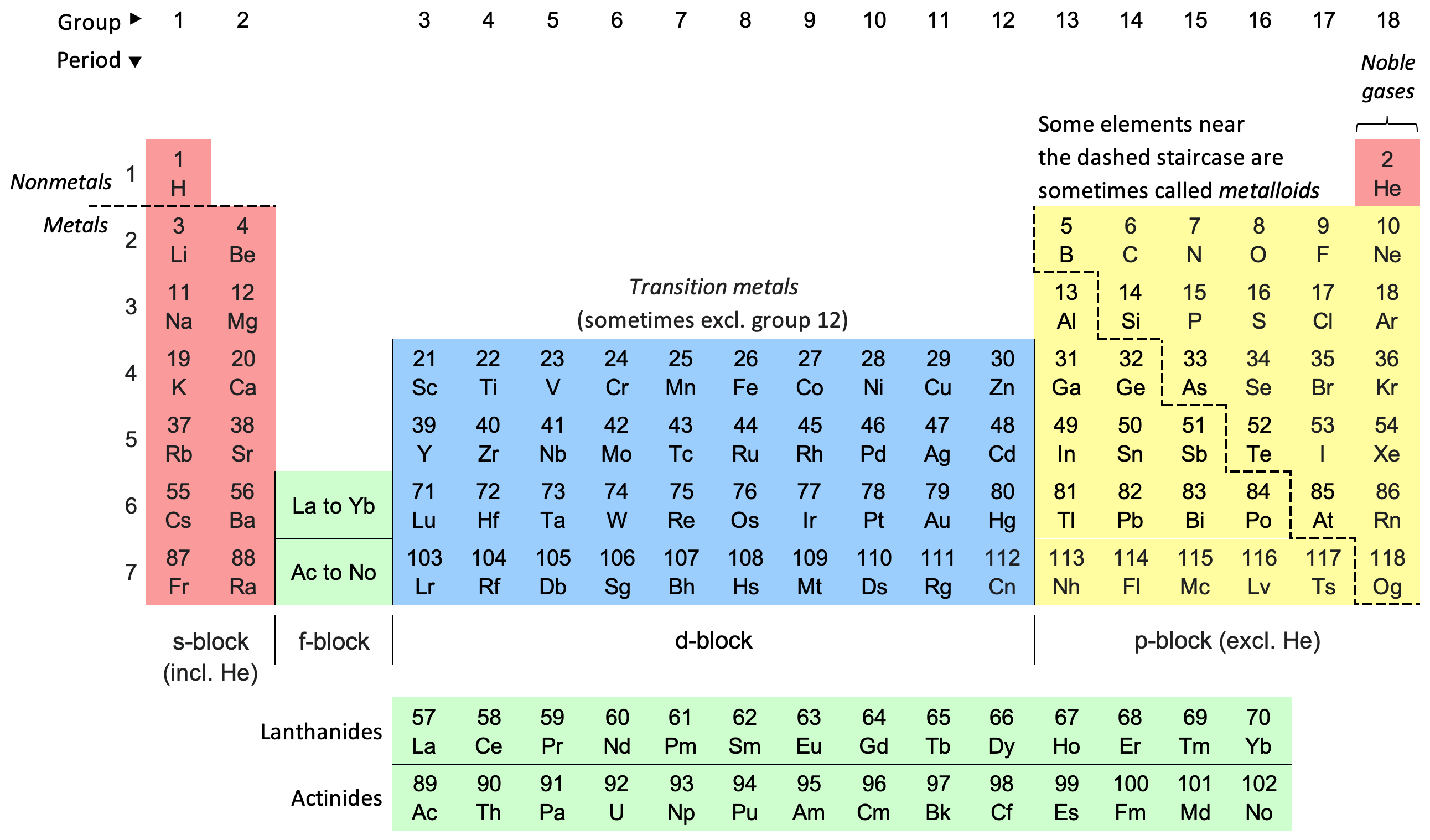
- chemistry
- noun
- The branch of science that deals with the identification of the substances of which matter is composed; the investigation of their properties and the ways in which they interact, combine, and change; and the use of these processes to form new substances.
- Example: In CHEMISTRY, we can see (with the aid of STM) Sexiphenyl is a molecule composed of six benzene type rings connected together to form a linear chain.
- en: chimie
- compound
- noun
- A specific type of molecule formed from two or more different elements chemically bonded together.
- Example: An isomer of citrate is then oxidatively decarboxilated to give ketogluterate, which is a five carbon COMPOUND.
- en: composé

- covalent bonds
- adjective, noun
- A chemical bond where two atoms share one or more pairs of electrons, typically between nonmetals, to achieve a stable electron configuration.
- Example: However, as hydrogen bonds are relatively weak, this leads to the structure being less stable than of other molecules containing more COVALENT BONDS such as diamond.
- en: liaison covalente

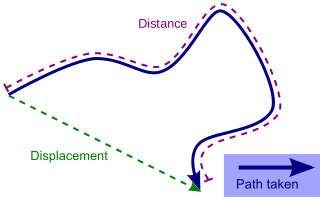
- displacement
- noun
- The change in an object's position, defined by its final position minus its initial position.
- Example: It can measure minute changes in DISPLACEMENT, as small as 0.01μm.
- en: déplacement
- element
- noun
- A pure chemical substance composed of only one type of atom.
- Example: An ELEMENT's half-life is the period of time it takes for half of the atoms present to decay away.
- en: élément

- eukaryotic cell
- adjective, noun
- A cell that has a membrane-bound nucleus to house its genetic material and contains other membrane-bound organelles like mitochondria and the endoplasmic reticulum to perform specialized functions.
- Example: According to the hydrogen hypothesis, however, the first EUKARYOTIC CELL did not form simply by accident.
- en: cellule eucaryote

- force
- noun
- The push or pull on an object with mass causes it to change its velocity.
- Example: The more dark matter there is, the greater mass the universe has, and therefore there is more gravitational FORCE acting 'on' the universe.
- en: force

- hydrogen bond
- adjective, noun
- The attraction between hydrogen and lone electron pairs of a strongly electronegative molecule.
- Example: Alcohols and Carboxylic acids are low in volatility due to their ability to HYDROGEN BOND, this creates a locked together structure which requires much energy to break.
- en: liaison hygrogène

- ionic bonds
- adjective, noun
- A chemical bond formed through the electrostatic attraction between oppositely charged ions (cations and anions) created by the transfer of electrons from one atom to another.
- Example: Sodium chloride is an example of IONIC bonding, the bond is formed due to the attraction of the opposite charges.
- en: liaison ionique

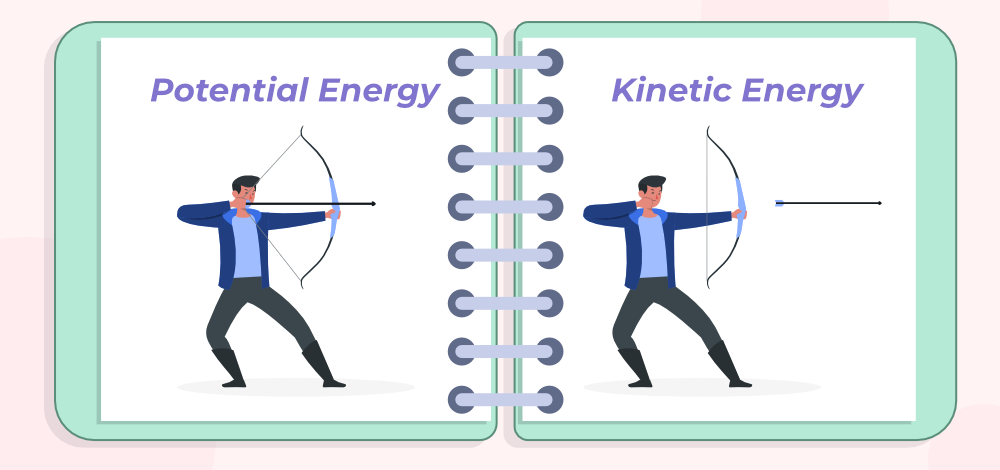
- kinetic energy
- noun
- The energy an object possesses because of its motion.
- Example: At the maximum voltage used to accelerate the electrons in this experiment, 5000V, the KINETIC ENERGY in joules of the electron is equal to the voltage multiplied by e, the charge on the electron.
- en: énergie cinétique
- mass
- noun
- The measure of the amount of matter in an object.
- Example: The sun keeps the Earth in orbit because our star has a lot more mass than the Earth.
- en: masse

- mechanical energy
- noun
- The total energy of motion (kinetic energy) and stored energy of position (potential energy) that an object possesses, allowing it to do work.
- Example: This experiment provided direct evidence for the synthesis of ATP driven by MECHANICAL ENERGY.
- en: énergy mecanique

- molecule
- noun
- Any two or more atoms (same or different) chemically bonded together.
- Example: The estrogen MOLECULE, being small and lipophilic, is able to diffuse in to the cell and bind to the estrogen receptor.
- en: molécule

- physics
- noun
- The branch of science concerned with the nature and properties of matter and energy. The subject matter of physics, distinguished from that of chemistry and biology, includes mechanics, heat, light and other radiation, sound, electricity, magnetism, and the structure of atoms.
- Example: This answer was seen to be discredited with the discovery of the Law Of The Conservation of Motion which also included conservation of direction meaning that the mind need not start motion it could also change its direction and still be in contravention of the laws of PHYSICS.
- en: physique

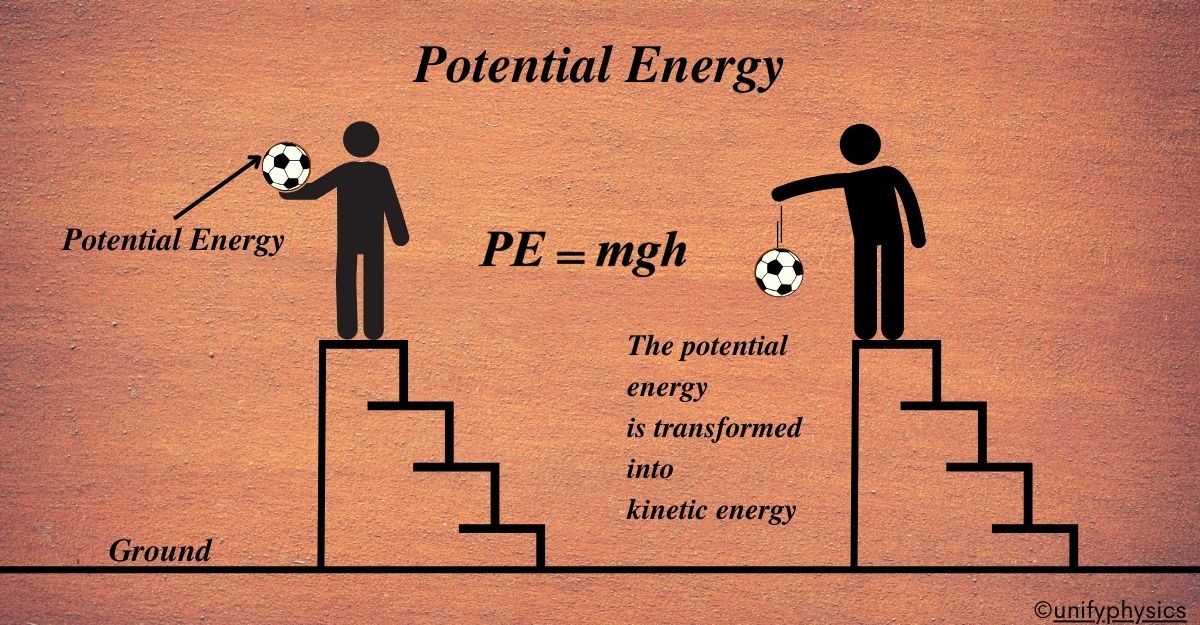
- potential energy
- noun
- The stored energy within an object or system due to its position, state, or arrangement of parts.
- Example: The POTENTIAL ENERGY of an elastic structure is increased when it is loaded by external forces or moments.
- en: énergie potentiel
- prokaryotic cell
- adjective, noun
- A microscopic, simple, single-celled organism that lacks a membrane-bound nucleus and other membrane-bound organelles.
- Example: Due to the small size of the PROKARYOTIC CELL and its high surface area to volume ratio it can obtain all the nutrients and gases it needs through simple diffusion, so the cell contains no complicated transport mechanisms.
- en: cellule procaryote

- reflection
- noun
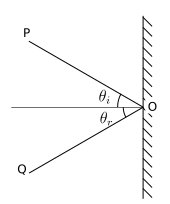
- The throwing back by a body or surface of light, heat, or sound without absorbing it.
- Example: The system does not absorb UV radiation, thus makes it less durable than rutile REFLECTION of light is not as good or as bright as rutile Uses: Delustering of synthetic fibres, where the colour is degraded due to long periods of contact with machinery during processing and is used in some ceramics.
- en: réflexion
- trajectory
- noun
- The spatial path traced by an object moving under the influence of one or more forces.
- Example: The seriousness of a potential collision is dependent on the likelihood (dependent on the TRAJECTORY) and magnitude (dependent on size and speed).
- en: trajectoire
- velocity
- noun
- The rate of change of position of an object in any direction.
- Example: Imagine a disk which is rotated about an axis perpendicular to its plane at a uniform angular VELOCITY.
- en: vitesse

- wave
- noun
- A moving disturbance, or vibration, of energy.
- Example: ECG analysis of the QRS WAVE has identified that when Q waves are present R-WAVE regression develops, a measurement of the extent of infarct can be calculated.
- en: onde

- weight
- noun
- The force of gravity acting on an object's mass, measured in units like newtons.
- Example: Mass spectrometer is an analytical tool used for measuring the molecular WEIGHT of a sample, with no limitation on the range of molecular mass.
- en: poids

Thanks for sharing your glossary.
ReplyDelete